What's new?
Thoughts, ideas and outlooks for October.
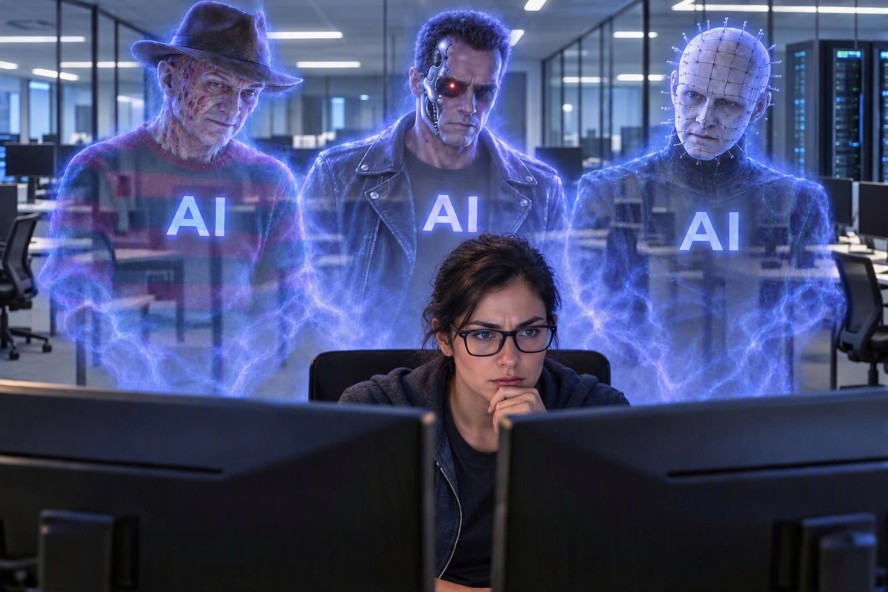
There’s a very high-risk feedback loop among industries and their suppliers and collaborators – we call it the “business as usual” racetrack and we see it particularly in healthcare where more sensitive content is often moved via email – inadvertently or otherwise.
The threat actors now have access to AI that will help them map relationships and communications patterns – even analyze and adopt specialized terminology. The ability to interpret content in documents and imitate writing styles is now routine.
Over much shorter periods of time, this allows them to more accurately create impersonations and create social engineering attacks that are harder to detect. Basically, the deception aligns with the industry and the people working in it.
According to Errol Weiss, the CSO for ISAC (the Health Information Sharing and Analysis Center), they continue to see social engineering as a highly effective, persistent threat. “What separates healthcare is how well the schemes exploit operational urgency, complex supplier relationships, and high-value targets like credentials and patient data.”
These are now among the top three breach patterns as reported in Verizon's 2026 Data Breach Investigations Report (DBIR) and we anticipate there will be expanded use of them because of AI’s growing ability to learn how people in organizations work and communicate.
As if you didn’t have enough to worry about this Halloween!